



Most educational creators make the mistake of using the same headline approach everywhere. They write academic-style titles for social media or clickbait hooks for scholarly content. Both approaches fail because each platform serves different learning needs and consumption behaviors.
YouTube Shorts viewers are in discovery mode, often procrastinating or seeking quick motivation. Substack readers have deliberately chosen to invest time in deeper learning. Your headlines need to meet people where they are mentally and emotionally. Just like our comprehensive guide on writing headlines across platforms explains, successful headlines match both medium and mindset.
Key Takeaways
YouTube Shorts educational headlines must create immediate curiosity and promise quick value since viewers have endless alternatives one swipe away.
Substack headlines work best when they signal depth, expertise, and unique perspective since subscribers have already committed to longer-form learning.
Educational content succeeds when headlines balance authority with accessibility - you need credibility without intimidation.
Each platform serves different stages of the learning journey, from spark of interest to deep understanding, requiring completely different headline strategies.
How to Write YouTube Shorts Headlines That Make Learning Irresistible
YouTube Shorts viewers aren't actively seeking education - they're seeking entertainment that happens to be educational. Your headlines need to disguise learning as discovery, making knowledge feel like a reward rather than work.
The average YouTube Shorts viewer makes a decision in less than 3 seconds. They're scrolling through dozens of options, looking for content that promises immediate satisfaction. Educational content competes directly with comedy, dance videos, and trending challenges.
Effective educational Shorts headlines follow specific psychological triggers:
Trigger Type | Psychology | Example |
|---|---|---|
Contradiction | Challenges assumptions | "Why everything you learned about the solar system is wrong" |
Forbidden knowledge | Creates exclusivity | "The psychology trick teachers don't want you to know" |
Rapid transformation | Promises quick wins | "Learn Spanish pronunciation in 60 seconds" |
Behind-the-scenes | Satisfies curiosity | "How magicians actually fool your brain" |
Use time-specific promises strategically. Educational Shorts work well with time constraints because they make learning feel achievable:
Master this math concept in under 2 minutes
The 30-second science experiment that explains gravity
Why this 10-second rule changes everything about memory
Time constraints also help with YouTube's algorithm because they set clear expectations for watch time and completion rates.
Lead with the outcome, not the process. Instead of "How to understand photosynthesis," try "Why plants are basically solar-powered food factories." The second version focuses on the fascinating result rather than the learning process.
Leverage the "I wish someone told me this earlier" emotion:
The math shortcut they never taught in school
Why your English teacher was wrong about this grammar rule
The history fact that changes everything about World War 2
This approach taps into viewers' regret about missed opportunities while promising to fill knowledge gaps.
Use conversational language that matches short-form content culture:
POV: You finally understand why the sky is blue
This blew my mind about black holes
Teacher reacts to students' wildest history questions
Avoid these common educational Shorts headline mistakes:
Academic jargon that intimidates casual learners
Overly broad topics that can't be covered in 60 seconds
Teaching-focused language instead of discovery-focused language
Missing emotional hooks that make learning feel exciting
Test different knowledge levels in your headlines. Some educational Shorts work better when they assume no prior knowledge ("Quantum physics explained like you're 5"), while others work better assuming some familiarity ("Advanced calculus concept that actually makes sense").
How to Write Substack Headlines That Build Trust and Authority
Substack readers have made a deliberate choice to subscribe to your educational content. They're not scrolling mindlessly - they're actively seeking depth, insight, and expertise. Your headlines need to reward that intentional decision with promise of substantial value.
Unlike social media, Substack headlines don't compete with entertainment content. They compete with other newsletters, articles, and educational resources for your subscribers' limited reading time. Your headline needs to signal that this particular piece deserves priority.
Substack educational headlines succeed through different mechanisms than social media:
Authority signaling through specificity: "The 3 cognitive biases that explain why students struggle with statistics" is more compelling than "Why students struggle with math" because specificity suggests expertise.
Unique perspective positioning: Your Substack subscribers chose you for your particular viewpoint. Headlines should reflect your unique angle: "What 15 years of teaching computer science taught me about how people actually learn to code."
Problem-solution clarity: Substack readers often subscribe to solve specific challenges. Your headlines should clearly connect to subscriber pain points: "How to explain complex concepts without losing your audience."
Depth promises that social media can't deliver:
The complete breakdown of why traditional language learning fails
Inside the research that's changing how we think about motivation
A philosopher's take on why modern education feels broken
Use newsletter-specific language that creates intimacy:
What I learned this week about memory formation
The conversation that changed how I teach writing
Three books that shifted my perspective on learning
This personal approach works because Substack feels more like correspondence than content consumption.
Structure headlines to reward different reading intentions:
For comprehensive guides: "Everything I know about teaching critical thinking (15-minute read)"
For case studies: "How one teacher increased engagement by 300% (and what went wrong first)"
For analysis pieces: "Why Finland's education system works (and why copying it doesn't)"
Leverage your unique position and experience:
After grading 10,000 essays, here's what students actually need to know about writing
The conversation with a Nobel laureate that changed my teaching
What homeschooling taught me about traditional classroom assumptions
Address the meta-learning that Substack readers value:
How to know if you're actually learning or just consuming content
The difference between information and understanding
Why most study techniques feel like work instead of progress
Use seasonal and topical relevance carefully. Unlike social media, Substack content has a longer shelf life. Headlines should feel timely without being time-sensitive: "What back-to-school season reveals about learning habits" rather than "September study tips."
Test headline length for your specific audience. Some educational Substack newsletters perform better with longer, descriptive headlines that set detailed expectations. Others work better with shorter, curiosity-driven headlines that encourage immediate opens.
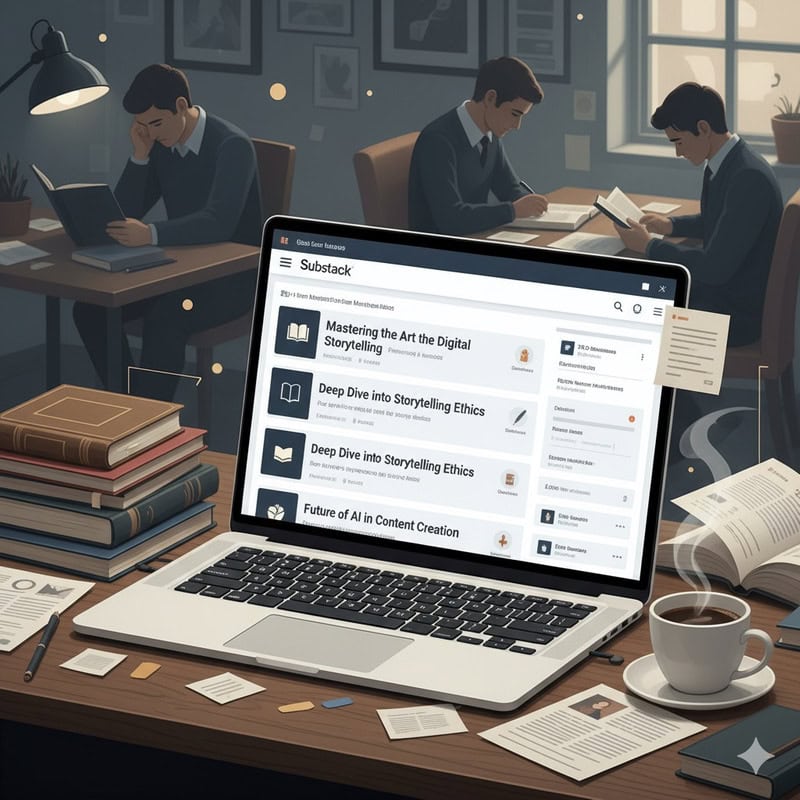
How to Adapt Educational Headlines for Different Learning Stages
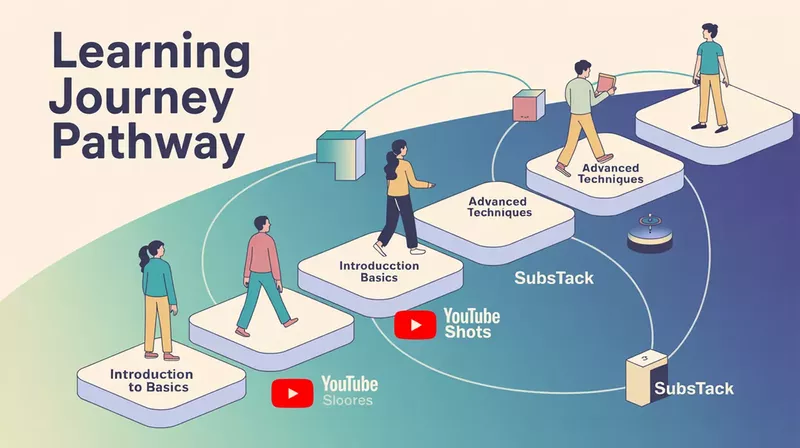
Educational content serves different stages of the learning journey, and your headlines need to match where learners are in their progression. A beginner exploring a topic needs different motivation than an expert seeking advanced insights.
The learning journey typically follows these stages: Awarenes -> Interest -> Consideration -> Trial -> Mastery
Match headlines to learning motivation:
Intrinsic learners respond to headlines that promise personal growth and understanding:
"How understanding statistics changes the way you see the world"
"The philosophy behind effective learning strategies"
"Why curiosity matters more than intelligence"
Extrinsic learners need headlines that connect to external goals:
"Skills that actually matter for data science jobs"
"How to explain your research in job interviews"
"The certifications worth pursuing in 2025"
Problem-solving learners want headlines that address specific challenges:
"Finally understand why calculus actually matters"
"How to remember what you read instead of forgetting it immediately"
"The real reason you procrastinate on learning projects"
Platform-specific adaptation for different learning stages:
Platform | Learning Stage Focus | Headline Approach |
|---|---|---|
Youtube shorts | Awareness/Interest | Curiosity-driven, entertainment value |
Substack | Consideration/Mastery | Authority-driven, depth signals |
Both | Trial/Application | Results-focused, practical value |
Consider your audience's existing knowledge level:
Beginners need headlines that reduce intimidation while building confidence
Intermediate learners want headlines that promise progression and skill-building
Advanced learners seek headlines that offer new perspectives or challenge existing thinking
Use language that matches expertise level without alienating other segments:
Beginner-friendly: "Statistics explained without scary math"
Intermediate: "Beyond basic statistics: concepts that actually matter"
Advanced: "Statistical thinking patterns most analysts miss"
Test different specificity levels. Sometimes broad headlines work better for attracting diverse audiences ("How learning actually works"), while specific headlines better serve targeted segments ("How visual learners can master audio-heavy subjects").
Address learning anxiety directly in headlines when appropriate:
"Math for people who think they're bad at math"
"Public speaking practice that doesn't feel terrifying"
"How to ask questions without feeling stupid"
Many educational headlines fail because they assume learners are confident and motivated. Often, addressing insecurity and fear creates stronger connection than promising advanced techniques.
The most successful educational headlines create a bridge between where learners are now and where they want to be, using language that feels achievable rather than overwhelming. Whether you're creating quick inspiration on YouTube Shorts or deep analysis on Substack, your headline should make learning feel like an opportunity rather than an obligation.
Table of contents

About the author