Industry Guides What's the ideal structure for construction website project portfolios?

What's the ideal structure for construction website project portfolios?

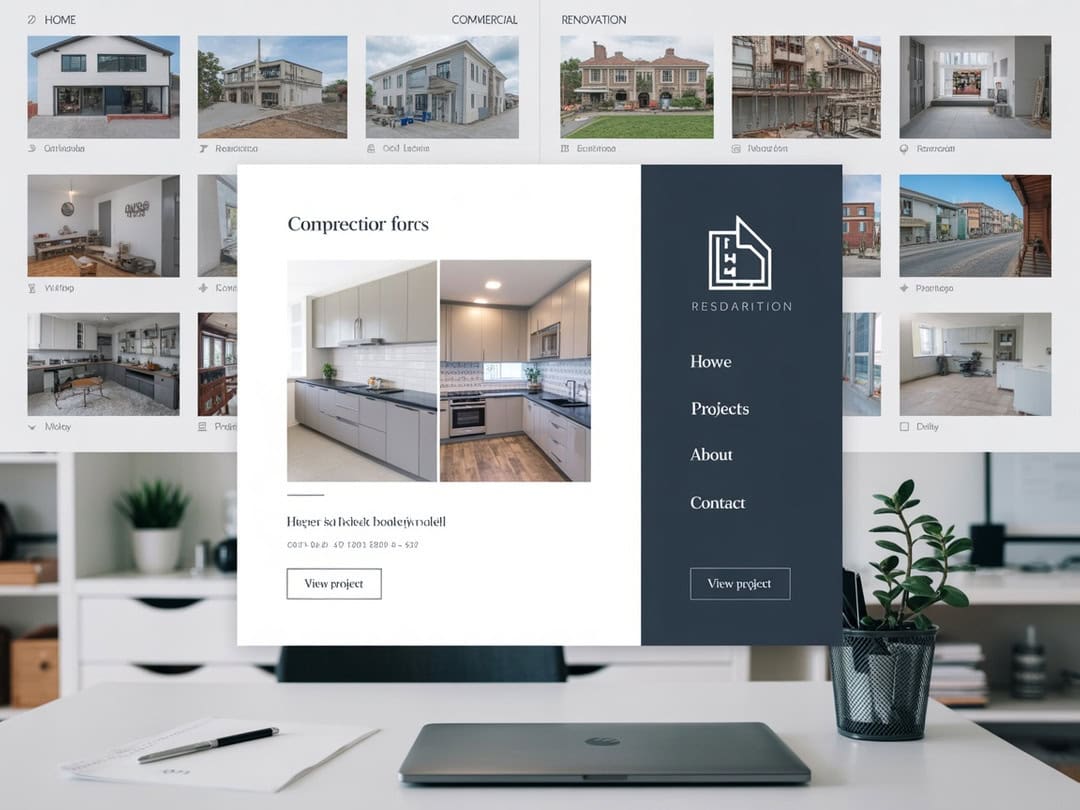
How to structure construction website portfolios effectively for client persuasion rather than just showcasing work. It covers organizing by client needs, focusing on problems solved, creating effortless browsing experiences, and strategically layering credibility elements.

Table of content

Most construction websites have a "Projects" section. Few make it work hard enough.

If you treat your portfolio as a decorative gallery, you miss its true purpose: persuading serious clients that you’ve already done what they’re now looking for.

Great portfolios don’t show what you’ve built.

They show that you understand what matters to the person hiring you.

construction-website-project-portfolios

Structure by how clients think - not how you file projects internally

Visitors don’t care about your internal project codes or technical categories.

They care about relevance.

That’s why the first level of structure matters:

  • If you do multiple types of work: separate into Residential, Commercial, Public Infrastructure, etc.

  • If location matters in your sales strategy: allow filtering by city or region.

  • If scale is a differentiator: create tags for Small-scale builds vs Large complex sites.

Don’t make users guess. Help them see themselves in your work.

Focus each project around the problem solved, not the concrete poured

The real value of your portfolio is not the concrete, steel, or square footage

It’s your ability to solve problems — to deliver on time, on budget, under constraints.

Each project page should briefly tell that story:

  • “This client needed X…”

  • “The challenge was Y…”

  • “Here’s how we solved it…”

Supported by:

  • Key facts: type, location, timeline, services, client type.

  • Strong visuals that document progress, not just the polished result.

  • If possible: before/after comparisons, or a visual timeline.

Make the browsing experience effortless - and scalable

No matter how great your work is, if it’s hard to navigate, it gets skipped.

That’s why consistency is essential:

  • Every project page should follow the same structure — so users know what to expect.

  • Use filters and tags to help visitors self-select relevant work.

  • Allow for “related projects” links to keep them browsing longer.

You want them to keep exploring, not bounce after one click.

Layer in credibility where it counts

Don’t just say you did a great job. Prove it.

Strategically place:

  • Client testimonials directly on project pages.

  • Trust badges (certifications, affiliations) alongside relevant work.

  • Third-party recognition (press, awards, partnerships) where applicable.

Let others speak for you. It’s more powerful.

Structuring a good portfolio manually can be time-consuming — especially as your business grows.

That’s where platforms like Nilead help: we allow you to tag projects, create filterable collections, and update content easily — no code needed. So your portfolio stays organized and persuasive without becoming a maintenance nightmare.

Takeaway

Your portfolio isn’t a trophy shelf. It’s a conversation starter, a credibility builder, and often your only chance to prove you’re the right fit. Structure it to mirror your clients’ mindset, not just your past work. Make it tell stories — not just show results.

Discord chat

We're available Monday–Friday, security and critical bug fixes are available 24/7.

Facebook page

Get the latest news and updates regarding Nilead platform and services.