Industry Guides How can your ecotourism website prove it’s actually "eco" not just using the buzzword?

How can your ecotourism website prove it’s actually "eco" not just using the buzzword?

Sustainability today is not a marketing bonus; it's a baseline. And yet, many ecotourism websites continue to rely on generic claims like "eco-friendly," "green," or "sustainable travel" without offering the evidence to back it up.

Table of content

In a world where “eco” is slapped on everything from shampoo to safari tents, travelers are growing wary. A beautiful logo and green color scheme won’t cut it anymore. Your ecotourism website needs to do more than claim sustainabilit, it has to demonstrate it.

Let’s go deeper into how.

how-can-your-ecotourism-website-prove-it-s-actually-eco-not-just-using-the-buzzword

1. Move beyond marketing: Build a traceable sustainability narrative

Your website should operate less like a brochure and more like a transparent operational report. That means offering not just what you’re doing, but how and why.

  • Don’t say: “We use local suppliers.”

    Do say: “We source 92% of our food from farms within 50km and publish our supply chain data annually.”

  • Don’t say: “We protect the environment.”

    Do say: “We enforce a 12-guest limit per trek to reduce trail erosion, and replant 100 native seedlings per month.”

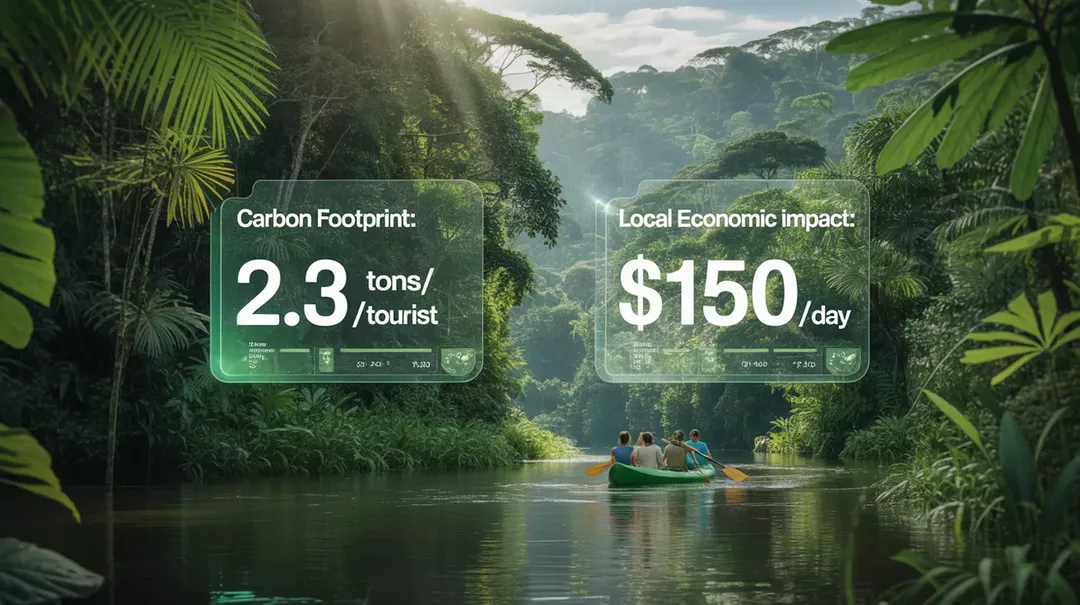
Transparency is the new authenticity. Use numbers. Use policies. Show your sustainability KPIs just like a public company would.

2. Make your local and ecological impact verifiable and human

True ecotourism balances people, planet, and purpose. Your website needs to reflect how your business directly uplifts local communities and ecosystems, not in abstract terms, but through human-centered storytelling.

  • Profile your staff and their journeys, especially locals in leadership roles

  • Feature community partnerships (with photos, locations, timelines)

  • Quantify your economic contribution (e.g., “80% of revenue stays in-region”)

  • Show before-and-after impact projects (wetland restoration, coral reef revival, etc.)

And do it visually. A short behind-the-scenes video of your composting system can be more convincing than paragraphs of policy text.

3. Design your website like a sustainable experience

Most “eco” websites forget the “eco-system.” Your site architecture and UX choices should embody sustainability in action:

  • Create a dedicated Sustainability Hub - a high-visibility, well-structured page with layered sections (environmental initiatives, social commitments, metrics, certifications)

  • Embed interactive impact maps (e.g., tree-planting sites, wildlife corridors you help preserve)

  • Include downloadable sustainability reports, even if they're basic, transparency breeds trust

  • Make certifications clickable and contextual, don’t just drop a logo; explain what it means, who issued it, and what it covers

  • Publish year-over-year progress with humility: “We’re still learning. Here’s what we improved. Here’s what we’re working on.

Think of your site not as a pitch but as a guided walk through your ethics.

Takeaway

Sustainability is no longer a message. It’s a model.

If your website can’t demonstrate clear, human, and measurable practices, travelers will click away, no matter how beautiful your jungle lodges or eco-trails may be.

At Nilead, we work with ecotourism pioneers to structure websites that prove sustainability. From dynamic sustainability hubs to real-time impact tracking and multilingual accessibility for global NGOs, we ensure your values are more than a paragraph, they’re an experience.

Discord chat

We're available Monday–Friday, security and critical bug fixes are available 24/7.

Facebook page

Get the latest news and updates regarding Nilead platform and services.