




You've probably seen them everywhere: AIDA, PAS, BAB - those three-letter acronyms that copywriting gurus swear will transform your conversion rates overnight. But using the wrong formula at the wrong time is worse than using no formula at all.
The truth is, copywriting formulas aren't magic bullets. They're tools. And like any tool, their effectiveness depends entirely on using the right one for the job. Just like we covered with writing CTAs that convert, the secret in matching your approach to your audience's mindset and needs.
Key Takeaways
Different formulas work for different audience awareness levels.
Cultural context changes everything.
The formula is just the skeleton.
Mixing formulas strategically often outperforms rigid adherence to one structure, especially in longer-form content where you need to address multiple psychological states.
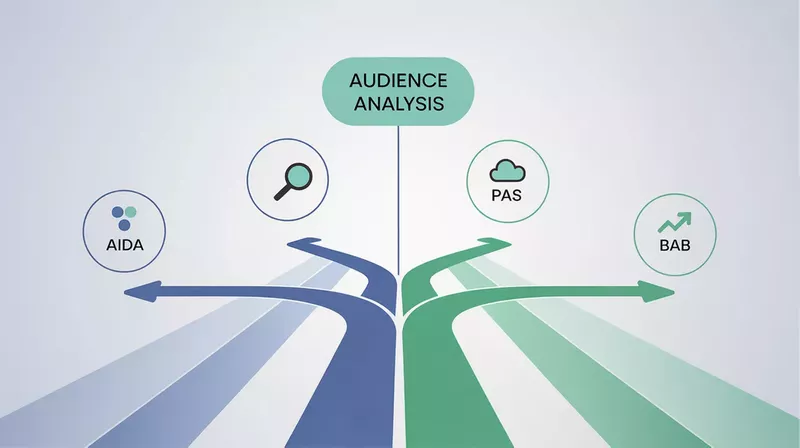
How to Choose the Right Formula for Your Audience and Market
Most copywriters pick a formula they like and force every piece of copy into that structure. That's backwards. The formula should match your audience's current state of mind, not your personal preference.
Formula | When to use | Market Examples | Key Strength |
|---|---|---|---|
AIDA | Audience knows they need something and are evaluating choices | Sales pages, product descriptions, competitive SaaS markets, e-commerce | Converts people ready to buy by guiding decision-making |
PAS | People know something's wrong but haven't found solutions | Health issues, productivity struggles, financial stress, relationship problems | Creates urgency through emotional connection to pain |
BAB | Successful people wanting next-level results | Lifestyle brands, personal development, business coaching, premium services | Motivates through possibility and transformation |
AIDA
When Your Audience Already Knows They Want Something
Attention, Interest, Desire, Action works best when people are already in buying mode. Your audience knows they have a problem, they're actively looking for solutions, and they just need to be convinced yours is the right choice.
This is why AIDA dominates sales pages and product descriptions. People landing on these pages aren't discovering problems, they're evaluating solutions. They need you to:
Grab attention quickly with relevance, not shock value
Build interest through understanding their specific situation
Create desire with specific, measurable outcomes
Make action feel natural and friction-free
In Canadian markets, AIDA needs a gentler touch. Instead of aggressive attention-grabbing headlines, try curiosity-based openers. Replace high-pressure desire language with benefit-focused explanations.
PAS
When Pain Points Drive Your Market
Problem, Agitate, Solve works when your audience is problem-aware but not solution-aware. They know something's wrong but haven't figured out how to fix it. PAS meets them in that frustration and guides them toward relief.
This formula dominates in markets where people are actively suffering:
Productivity tools for overwhelmed professionals
Health solutions for chronic issues
Financial advice for debt stress
Relationship guidance for struggling couples
The key is agitating the problem enough to create urgency without making people feel hopeless. PAS works especially well in American markets that respond to direct, problem-focused messaging.
BAB
When Your Audience is Aspiration-Driven
Before, After, Bridge works when people are motivated by improvement rather than problem-solving. They might not have urgent pain points, but they want better outcomes. BAB paints a picture of transformation and positions your solution as the path to get there.
BAB excels when your audience is already somewhat successful but wants the next level:
Business owners seeking growth, not survival
Professionals wanting career advancement
Individuals pursuing personal development
Brands looking to scale existing success
New markets often respond better to PAS because people don't yet know solutions exist. Mature markets lean toward AIDA because buyers are comparing options. Aspirational markets prefer BAB because the focus is on growth rather than problems.
American audiences tend to respond to direct, benefit-focused language across all formulas. Canadians prefer softer approaches with more explanation and less pressure. International markets often need relationship-building before any formula will work effectively.
How to Write Copy Using Each Formula Effectively
Understanding when to use each formula is half the battle. The other half is executing them in ways that actually connect with your audience.
Mastering AIDA in Practice
Your Attention phase needs to be relevant, not just loud. Grabbing attention with shock value or extreme claims might work initially, but it attracts the wrong audience and builds the wrong expectations.
Instead, grab attention by immediately connecting with your audience's specific situation:
If you're a freelance designer who's tired of chasing payments...
This approach filters for your ideal audience while hooking their interest.
Interest comes from demonstrating that you understand their world. Share insights they haven't heard before, reference experiences they've had, or explain something they've always wondered about. Interest about them seeing themselves in your copy.
Desire builds through specific outcomes, not vague promises. Instead of "you'll be more successful," try
you'll have three qualified leads in your inbox every Monday morning.
Specific outcomes feel achievable and measurable.
Action becomes natural when everything before it has been convincing. If you've truly built attention, interest, and desire, your call-to-action doesn't need to be pushy. It just needs to be clear and easy.
Executing PAS Without Being Manipulative
The Problem phase should feel like validation, not attack. People need to feel understood, not criticized. Focus on the situation, not personal failings:
Most content creators struggle with consistent engagement
rather than "You're failing at social media."
Agitation works best when it focuses on consequences of inaction rather than personal inadequacy.
Without a clear content strategy, you'll spend years creating posts that never build real audience
hits harder than "You don't know what you're doing."
The agitation phase also works well when you expand the problem beyond the obvious. If someone knows they struggle with time management, agitate by explaining how that affects their relationships, stress levels, and long-term goals.
Solve needs to feel proportional to the problem you've created. If you've agitated a minor inconvenience, don't present a comprehensive life-transformation solution. The solution should match the problem in scope and intensity.
Making BAB Feel Authentic
Before should be relatable. You're not saying their current situation is terrible, you're acknowledging where they are without judgment.
Right now, you're probably creating content based on inspiration rather than strategy
works better than "Your content strategy is a mess."
After needs to be specific and believable. Vague promises of "success" or "freedom" don't create real desire. Paint detailed pictures:
You'll open your analytics to see consistent growth, not random spikes and valleys.
Bridge is where most BAB copy fails. The bridge needs to explain why it's the logical path from Before to After. This is where you demonstrate understanding of the obstacles and provide credible reasons why your approach works.
Adapting Tone for Different Markets
Canadian audiences often prefer collaborative language over authoritative language. Instead of "You need to..." try "Consider..." or "What if you..." This softer approach builds trust without triggering resistance.
American audiences typically respond well to confident, direct language. They want to know you're sure of your solution and can deliver results. Confidence translates to credibility in American markets.
International markets often need more context and explanation. What seems obvious to North American audiences might need additional background for global readers. Don't assume shared cultural knowledge or business practices.
How to Test and Optimize Your Formula-Based Copy
Most people write copy, publish it, and hope for the best. The creators who consistently win treat copywriting like a science experiment: hypothesis, test, measure, adjust.
Start with baseline metrics
Before you change anything, document current performance. How many people are clicking, signing up, or buying? What's your current conversion rate? You can't improve what you don't measure.
Test one formula at a time
Don't completely overhaul your copy and then wonder which change made the difference. If you're currently using no formula, try one. If you're using AIDA everywhere, test PAS on problem-focused content.
Give tests time to run
One week of data rarely tells you anything useful. Run tests for at least 30 days or until you have statistical significance, whichever comes first. Seasonal variations and external factors can skew short-term results.
Look beyond conversion rates
A formula might increase clicks but decrease quality of leads. Or it might lower overall conversions but attract better customers who spend more. Consider the full funnel, not just the first conversion.
Document what you learn
Keep notes on which formulas work best for which types of content, audiences, and offers. This creates a playbook you can reference instead of starting from scratch every time.
Mix formulas strategically
Long-form sales pages often benefit from combining approaches: start with PAS to identify the problem, shift to BAB to show the transformation, finish with AIDA to drive action. The best copy serves your audience's psychological journey, not rigid formula adherence.
Test cultural adaptations
If you're expanding into new markets, test your copy with people from those cultures before launching. What feels natural to you might feel aggressive, confusing, or inappropriate to others.
Pay attention to qualitative feedback
Comments, emails, and customer conversations often reveal more than analytics. If people consistently ask questions your copy should have answered, or if they seem confused about your offer, the formula might not be serving your audience effectively.

Your copy should feel natural to your audience, even if it follows a proven structure behind the scenes. When formulas work properly, people don't notice the formula — they just feel compelled to act.
Table of contents

About the author