





Search engines are getting better at recognizing natural, helpful content while AI-generated content floods the internet with generic noise. The creators who win are those who can satisfy search algorithms without sacrificing their authentic voice.
This is about understanding that the best SEO content feels like it wasn't optimized at all, the structure should be invisible to readers while serving its strategic purpose.
Key Takeaways
Search intent matters more than keyword density
Human-first writing naturally incorporates SEO elements when you understand your audience's language and search behavior patterns.
Google's algorithm increasingly rewards content that keeps people engaged, which means personality and authentic voice are becoming ranking factors.
Strategic keyword placement feels natural when keywords match how your audience actually talks about their problems and solutions.
How to Research Keywords That Match Human Language
The biggest mistake in SEO content is starting with keyword tools instead of starting with people. Most content creators pick keywords based on search volume and competition metrics, then force their writing to match those exact phrases. This approach creates stilted, unnatural content that serves algorithms but alienates humans.
Start with conversations, not keyword tools. Pay attention to how your audience actually describes their problems:
What words do they use in comments on your posts?
How do they phrase questions in your DMs or emails?
What language appears in customer support conversations?
How do they describe their situation in community forums?
Real people don't search for "best practices for content marketing optimization." They search for "why is nobody reading my blog posts" or "how to get more people to see my content."
Traditional Keyword Research | Human-First Keyword Research |
|---|---|
"Content marketing strategy optimization" | "how to plan content that actually works" |
"Social media engagement tactics" | "why does nobody comment on my posts" |
"Email marketing conversion rates" | "how to write emails people actually open" |
"SEO optimization techniques" | "how to get found on Google without being boring" |
The second column represents how people actually think and search. When you optimize for these natural phrases, your content feels conversational while still hitting SEO targets.
Use Google's own suggestions as a reality check. Type your main topic into Google and see what autocomplete suggests. These predictions are based on real search behavior, not keyword tool estimates. The "People also ask" section shows you the specific questions your audience wants answered.
Look at competitor comments and reviews. Your competitors' audiences use the same language your potential audience uses. Comments reveal the exact words people use when they're frustrated, excited, or confused about a topic.
Mine your own analytics for long-tail opportunities. Google Search Console shows you the exact phrases people used to find your existing content. These real queries often reveal keyword opportunities that tools miss.
Test your keywords in conversation. If you can't work a keyword naturally into a sentence you'd say to a friend, it's probably not going to work in your content. "I'm going to optimize my content marketing strategy" sounds robotic. "I'm going to figure out why my content isn't working" sounds human.

How to Write Content That Satisfies Search Intent and Humans
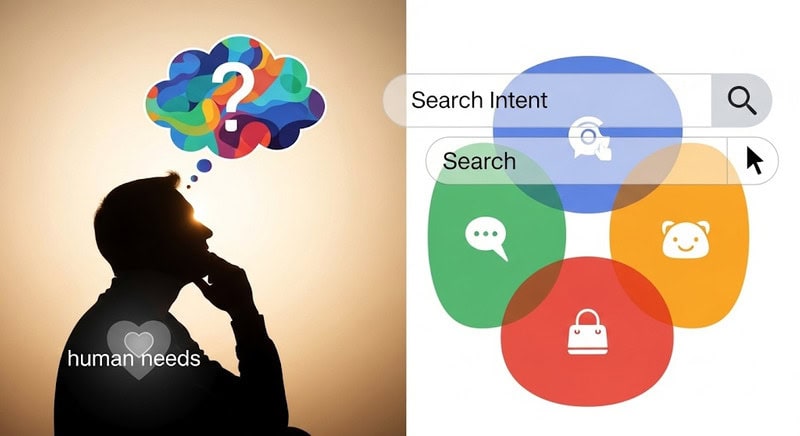
Search intent is what someone actually wants when they type a query into Google. Most SEO content fails because it targets keywords without understanding the underlying intent behind those searches.
The four types of search intent require different content approaches:
Informational Intent: "How does X work?"
People want to understand something. They're not ready to buy; they're trying to learn. Content should educate thoroughly without being promotional.
Example: Someone searching "how does email marketing work" wants to understand the concept, not immediately sign up for a service. Your content should explain the process, provide examples, and maybe mention tools as illustrations rather than sales pitches.
Navigational Intent: "X company login"
People are looking for a specific website or page. Unless you're that company, you're not going to rank for these terms. Don't waste time optimizing for them.
Transactional Intent: "best X for Y"
People are ready to make a decision or purchase. They want comparisons, reviews, and specific recommendations. This is where strategic product mentions and affiliate content work well.
Commercial Investigation: "X vs Y" or "X review"
People are in research mode before making a decision. They want detailed analysis, pros and cons, and honest evaluation. This content should be comprehensive and balanced.
Match your content format to search intent:
How-to queries need step-by-step guidance with examples
Comparison queries need side-by-side analysis with clear recommendations
Problem-focused queries need solutions with context about why the problem exists
Definition queries need clear explanations with relevant examples
Write for the person behind the search, not the algorithm. When someone searches "how to write better emails," they're probably frustrated that their current emails aren't getting responses. Address that frustration directly:
If your emails are landing in inboxes but not getting replies, the problem usually isn't your subject line, it's your approach.

Use natural transitional phrases that include keywords. Instead of forcing keywords into awkward sentences, use them in conversational transitions:
"Now that we've covered why email marketing works, let's talk about how to actually do it..."
"The biggest mistake I see with content marketing is..."
"Here's what most people get wrong about SEO optimization..."
These transitions feel natural while signaling to search engines what your content covers.
Answer the question behind the question. When someone searches "how to write blog posts," they're probably really asking "how to write blog posts that people will actually read and share." Address both the surface question and the deeper concern.
Include related terms and synonyms naturally. Google understands context and related concepts. Instead of repeating the same keyword, use related terms that real people use:
Content marketing → content strategy, content creation, content planning
SEO optimization → search rankings, Google visibility, organic traffic
Email marketing → newsletters, email campaigns, email strategy
This approach satisfies search algorithms while making your writing more varied and interesting.
Break up long paragraphs for better readability and SEO. Search engines favor content that's easy to scan, and readers prefer shorter paragraphs on mobile devices. But don't break paragraphs arbitrarily — break them at natural thought transitions.
Use bullet points and numbered lists strategically:
They improve readability on all devices
They often appear in featured snippets
They break up wall-of-text formatting
They make complex information digestible
Link internally in ways that help readers and search engines. Connect related content naturally within your text. Instead of generic "click here" links, use descriptive anchor text that tells readers what they'll find:
This approach works especially well when combined with copywriting formulas that match your audience.
End with clear next steps. Search engines measure how long people stay on your site and whether they continue to other pages. Give readers a logical next action that keeps them engaged.
The most successful SEO content doesn't feel optimized because the optimization serves the reader's needs rather than fighting against them. When your content genuinely helps people accomplish their goals, search engines notice. When it's stuffed with keywords but provides little value, both humans and algorithms lose interest quickly.
Stop trying to game the algorithm and start serving your audience. The best SEO strategy is creating content so useful that people can't help but engage with it, share it, and come back for more.
Table of contents

About the author