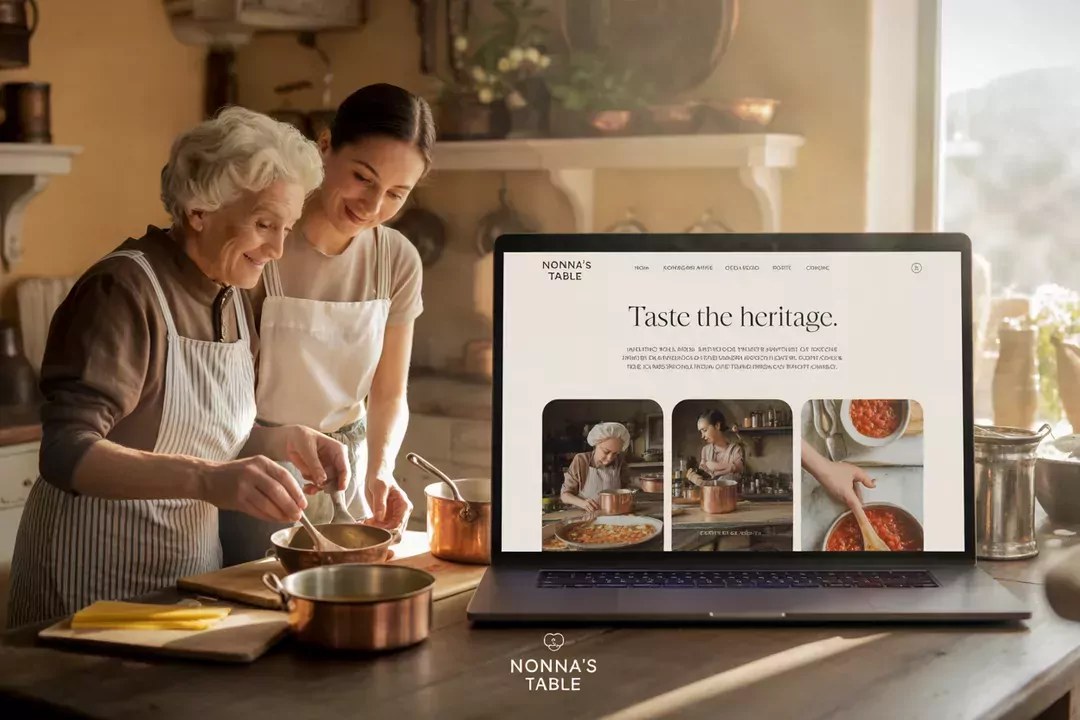
Let's start with a story!
Lucia had never built a website before. She wasn’t a tech person. She was a second-generation Italian-American chef in Toronto who had inherited her grandmother’s recipes. And her fiery sense of hospitality.
Her restaurant, Nonna Lucia’s, was doing fine.
Walk-ins, word of mouth, a few Instagram tags here and there.
But when the pandemic hit, everything changed.
No more walk-ins. No more foot traffic.
Lucia had to move online. Fast.

She did what most restaurant owners do:
Hired a cheap designer
Uploaded a PDF menu
Added a “Book Now” button
Posted three food photos and called it a day
Traffic came, sure. But something was missing. No one stayed on the site or connected. Online orders trickled, but reservations were dead.
Lucia started to wonder:
How do I translate who we are - that feeling of family, warmth, and spice — into a screen?
One evening, her niece (a marketing student) sat down and asked:
Auntie… why do you cook?
Lucia laughed. Then she told the story.
Of how Nonna used to sneak her into the kitchen during nap time. How the lasagna recipe was never written down, only whispered. And how every sauce had to simmer to Dean Martin playing in the background.
That was it. The soul.
That story, not the dishes, was the reason people kept coming back.
The homepage opened with:
Every meal here starts with a memory. Usually Nonna’s.
There were photos of Lucia as a kid in the kitchen.
A short paragraph about how every sauce is still simmered for 6 hours.
A video clip where Lucia showed the burn mark on her wooden spoon “from the night we first opened.”
The site wasn’t “optimized” in the traditional sense.
But something changed.
Time on site tripled
People left emotional reviews: “Felt like home,” “Reminds me of Sunday dinner growing up”
Local blogs picked up the story and featured it
Bookings filled three weeks in advance
Their Google ranking improved because people actually stayed and shared
People don’t remember menus. They remember meaning.
They remember:
The story of the chef who came from a fishing village
The bar built from reclaimed wood from an old jazz club
The couple who opened their dream brunch place after surviving cancer
Stories build emotional context. And in a sea of generic options, emotion is differentiation.
On your website, storytelling can live in:
The “About” page
The way you describe your dishes (“inspired by the street markets of Oaxaca…”)
Videos and founder quotes
Even the way you write your menu (“Our most popular dish since day one”)
You might be thinking:
Sure, I have a story. But how do I actually tell it online?
That’s where a thoughtful platform like Nilead makes a difference.
Instead of limiting you to generic templates, Nilead helps restaurants:
Build flexible content blocks where you can share stories with images, videos, and quotes
Integrate custom ‘About the Chef’ or ‘Our Story’ sections without needing a developer
Optimize your story content for SEO so your heritage becomes discoverable
Update your narrative as your restaurant evolves (new branches, new milestones, etc.)
In other words, you focus on the story - we make it shine online.
Takeaway
You don’t need to write a novel. But you do need to say more than “Welcome to our restaurant.”
Storytelling isn’t fluff. It’s strategy, because it makes people care before they click ‘Book Now.’
Your food already has a soul. Let your website show it.