Let’s start with a real-world scene.
You’ve launched a new real estate website. The listings are sharp, the photos pop, the design is clean. You wait for Google to love it.
But weeks later, you notice something odd:
Traffic is flat.
Projects don’t show up in search.
And your most important pages aren’t even indexed.
You check Google Search Console — and suddenly you’re staring at a wall of errors:
“Discovered – currently not indexed”
“Crawled – not indexed”
“Duplicate without user-selected canonical”
So what went wrong?
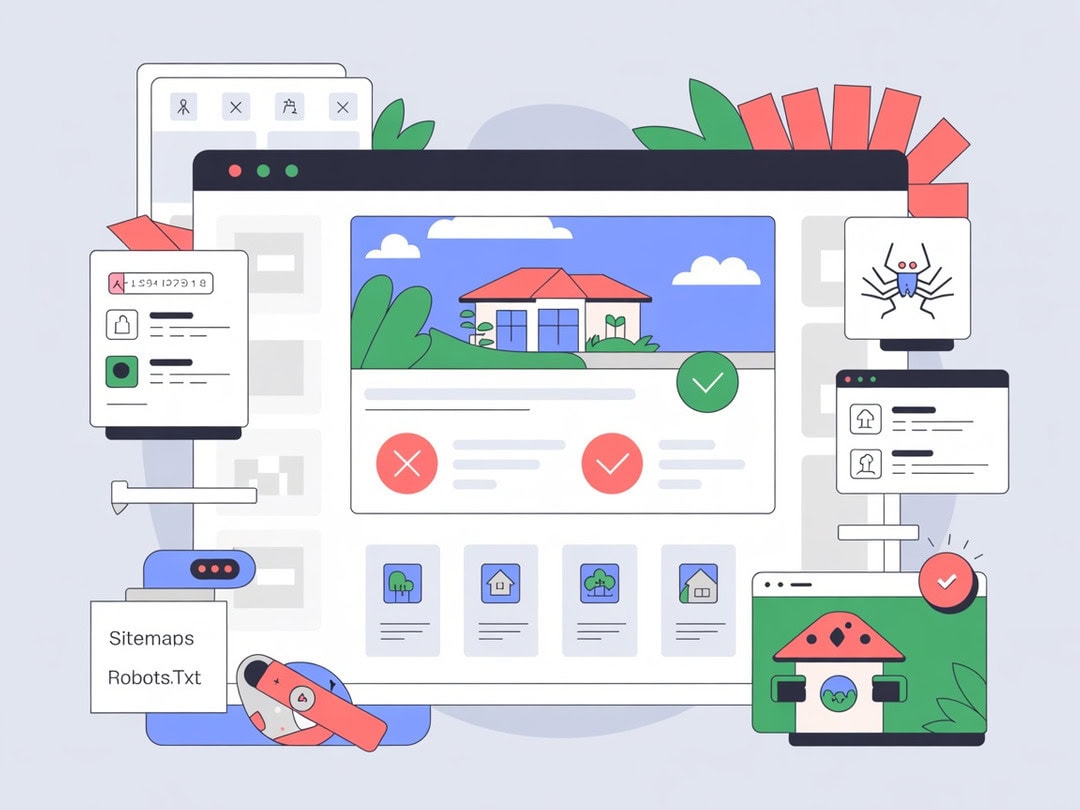
Let’s run a clean crawlability audit, step by step — especially tailored for real estate sites.

Start simple: are you accidentally telling Google not to crawl your listings?
Make sure robots.txt isn’t blocking /projects/ or any key folder
Ensure no pages have <meta name="robots" content="noindex"> unless intentional
On dynamic project pages, check if parameters (e.g., ?location=) are causing crawl issues
Your XML sitemap should:
Include only canonical, live URLs (200 status)
Exclude redirects, 404s, staging content
Be updated dynamically if your listings change often
Real estate websites with dynamic inventory must use auto-updating sitemaps. If your platform (like Nilead) supports this, make sure it’s connected and submitted in Google Search Console.
Use tools like Screaming Frog or [Ahrefs Site Audit] to simulate a crawl.
Look for:
Orphan pages (important listings with no internal links)
Infinite loops (due to filters or pagination)
Duplicate content with unclear canonical tags
Fix internal links. Prune unneeded parameter pages. Consolidate similar listings if needed.
If your site is built using JS-heavy frameworks (like React or Vue), content may not be visible to crawlers unless properly hydrated.
Fix:
Use server-side rendering (SSR), pre-rendering, or hybrid rendering. If you're using a platform like Nilead, verify how dynamic content (like project listings) is served — rendered HTML is always safer.
Once fixes are made:
Resubmit the sitemap
Use the “Inspect URL” tool for key pages
Watch for indexing over the next 3–7 days
Track improvements in coverage reports, not just rankings.
Takeaway:
Crawl issues are invisible — until they cost you traffic. For real estate websites, where every project page is a potential lead, auditing crawlability isn’t optional. It’s the difference between being found and being forgotten.