Industry Guides How should real estate websites handle image optimization for SEO and performance?

How should real estate websites handle image optimization for SEO and performance?

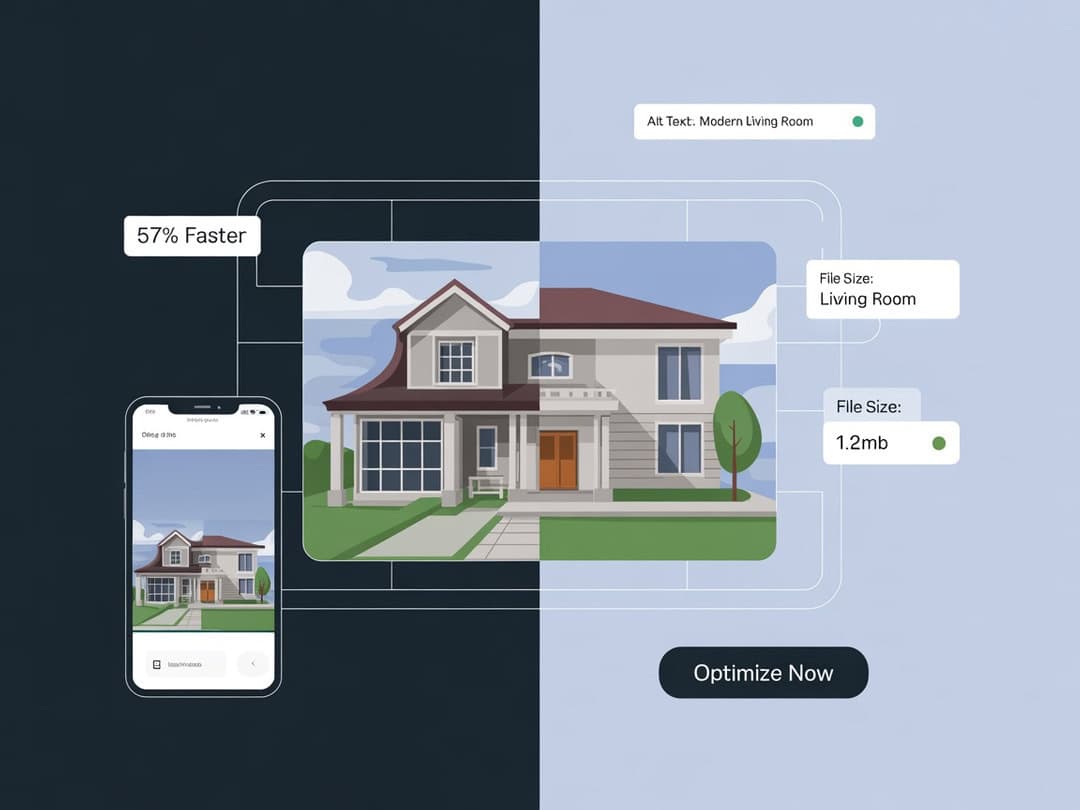
Real estate websites need optimized images for both SEO and performance - beautiful photos mean nothing if they load slowly or lack proper alt text and structure.

Table of content

Let’s bust a myth right out of the gate:

“If my photos look amazing, SEO will take care of itself.”
Wrong. Beautiful doesn’t mean optimized.

In real estate, visuals matter more than in most industries. But that makes optimization even more critical — not less. Why? Because when your listing page loads slowly or your gallery images dominate mobile bandwidth, you’re losing conversions and rankings at the same time.

So let’s break this down. What are the most common image-related mistakes real estate sites make — and how can we fix them?

real-estate-image-seo-performance-and-rankings

Myth #1: “High-res = high value”

Large images (2–4 MB) may look stunning on a retina display — but they cripple load speed, especially on mobile.

Fix:
Use WebP format where possible, compress images without visible quality loss (try 75–80% compression), and use responsive image handling (srcset) so that the browser loads only what’s needed.

Myth #2: “I don’t need alt text — users can see the photo”

Google can’t. And neither can screen readers. If you skip alt text, you’re leaving both accessibility and SEO signals on the table.

Fix:
Write meaningful alt text that describes the purpose of the image, not just the object:
🟢 “Rooftop pool with skyline view in District 2”
🔴 “Image12345.jpg”

Myth #3: “Galleries are enough; captions don’t matter”

Captions are one of the most-read elements on a page. They anchor visual content, reinforce keywords, and improve dwell time.

Fix:
Use short, natural captions that describe what makes each feature unique: “Open-concept kitchen with natural light, perfect for entertaining.”

Myth #4: “Lazy loading breaks SEO”

It doesn’t — if done right. Lazy loading defers off-screen images until they’re needed, which improves performance without harming SEO.

Fix:
Use native lazy loading (loading="lazy") or well-tested JS libraries that don’t block content crawling.

Implementation tip: It’s not just about dev work

Most of these fixes don’t require advanced coding. If your CMS (or platform like Nilead) supports image presets, WebP conversion, and structured galleries, you can handle 80% of optimization through settings — not scripts.

But always test: tools like PageSpeed Insights and WebPageTest show you which images are slowing you down and why.

Takeaway:

Great visuals sell properties — but only if people actually see them. Optimize for speed, structure, and discoverability. Because in real estate SEO, the prettiest picture is the one that loads in under two seconds.

Discord chat

We're available Monday–Friday, security and critical bug fixes are available 24/7.

Facebook page

Get the latest news and updates regarding Nilead platform and services.