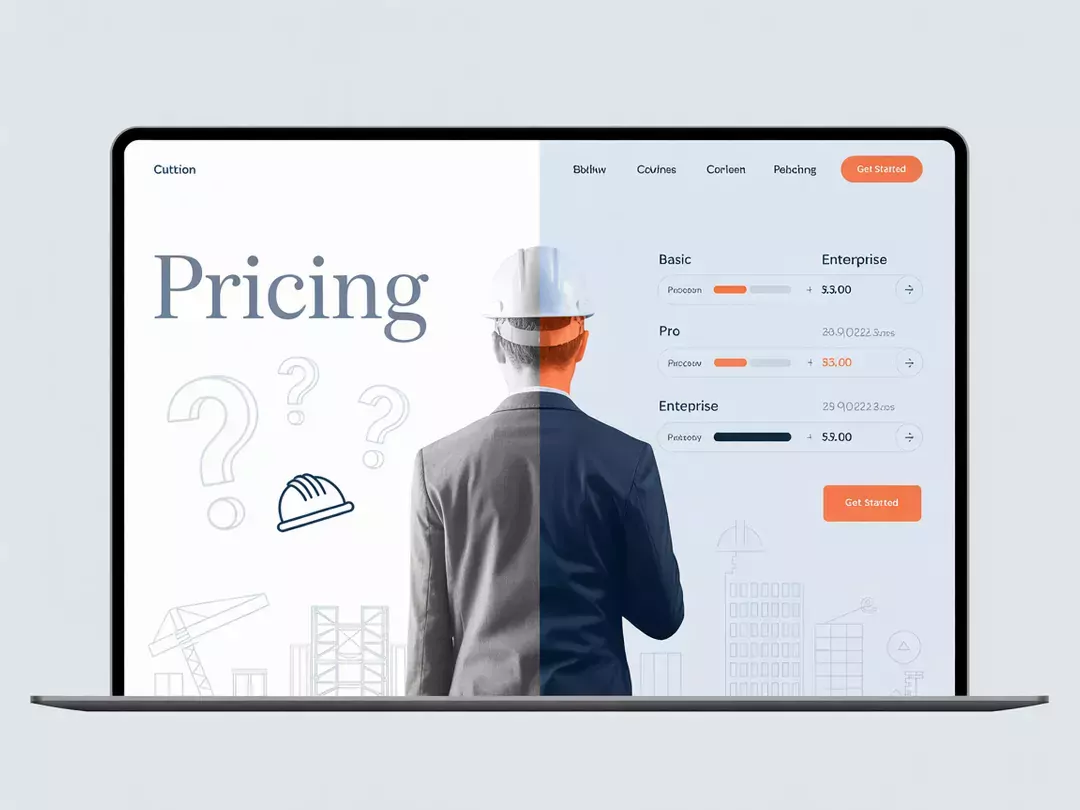
Transparency or Trouble?
Here’s the truth:
Clients want clarity.
Contractors fear being boxed in.
And that tension shows up in one of the most common questions in construction website strategy:
“Should we publish prices?”
The short answer?
Yes – but not like an e-commerce store.

Today’s clients don’t browse passively — they research thoroughly.
They compare options, ask Google about ballpark figures, and often eliminate contractors before even reaching out.
If your website says nothing about pricing, while competitors explain theirs clearly (even if vaguely), you're already behind.
Even a short section titled “How We Price Our Work” will outperform silence.
Why? Because clients don’t need final numbers — they need a sense of:
How you think
What factors drive your estimates
And whether you’ve done this enough to have a process
Let’s be clear: posting exact prices is rarely a good move in the construction world.
Why?
Every site, client, and spec sheet is different.
Static pricing can create legal or PR trouble if expectations aren’t met.
It attracts the wrong kind of leads — people chasing numbers instead of value.
And most importantly, it undermines the reality that construction is consultation-heavy and tailored.
What works better is a tiered, structured approach to pricing content. For example:
1. Start with “How Pricing Works”
Clearly explain what influences your costs:
Project size and complexity
Material selection
Timeline pressures
Site constraints (e.g., demolition, access)
2. Add example project ranges
Instead of a fixed price, show sample cost brackets:
“Recent office fit-outs range from $80K to $200K, depending on finish level.”
“Design-build packages for 3BR homes start around $350K.”
3. Layer in tools or downloads
Let visitors go deeper only if they want:
Cost calculator (for early-stage planning)
PDF cost guide (“What Drives Construction Pricing in 2025”)
Project checklist before requesting a quote
This gives value to every type of visitor — curious, cautious, or ready to talk.
What you say about pricing doesn’t just inform — it positions you.
If you're premium, explain why. (Not just what you charge, but what you include.)
If you’re flexible, show how you work with varying budgets without cutting corners.
If you specialize, make that clear — “We don’t do small repairs, only full-scope construction.”
This kind of positioning filters out mismatches and attracts ideal leads — clients aligned with your model.
With platforms like Nilead, you can create modular pricing sections, attach gated PDFs, or include dynamic quote forms that adapt as your offering evolves — no need to rebuild the page every time your numbers shift. It’s clarity without rigidity.
Takeaway
Construction clients don’t expect fixed prices.
They expect clarity, fairness, and confidence in your process.
Show them that — and you’ll earn trust before the first phone call.